


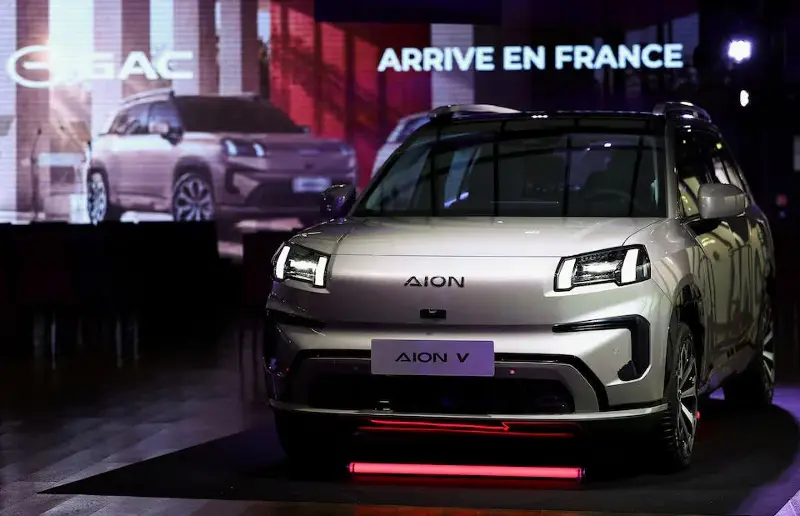
Making waves in Europe
The latest data shows that sales of Chinese- made hybrid vehicles in the EU have surged over the past four and a half years, raising concerns about the future of the European automotive industry.
In 2022, only 659 fully hybrid vehicles (vehicles that use a gasoline or diesel engine to charge an electric motor and battery) manufactured in China were sold in the EU. However, after Brussels imposed anti-subsidy duties on purely electric vehicles imported from China in 2024, hybrid sales surged to 160,662 units in the first seven months of this year alone.
Data from Eurostat shows that sales of Chinese-made plug-in hybrid vehicles – a popular type of vehicle known for its long range and ability to charge the battery using both the internal combustion engine and an external power source – have also surged, from 56,706 units in 2022 to 217,764 units in the period from January to July this year.
The number of Chinese hybrid vehicles on the roads is currently causing concern for the automotive industry and Brussels officials; the EU has asked China to voluntarily reduce its hybrid vehicle exports to the bloc or face trade protection measures, most likely import quotas.
On October 8th, the German automotive industry indicated for the first time that it was ready to consider imposing specific tariffs on Chinese hybrid vehicles. The German Automotive Industry Association (VDA) has called on the European Commission (EC) to conduct a comprehensive assessment of the impact of any trade safeguard measures, from quotas and price floors to tariffs.
The association stated: "The EU also needs to have effective and up-to-date trade defense tools at its disposal. When unfair competition is proven, consideration should be given to using trade defense tools that comply with WTO regulations; these are legitimate and proven measures to create a level playing field and ensure fair competition conditions." According to new figures released by the European Automobile Manufacturers Association (ACEA), hybrid vehicles now account for nearly 37% of the total market, while electric vehicles account for more than 21%.
ACEA data shows that three Chinese manufacturers – BYD, Chery, and Leapmotor – are making significant strides with triple-digit growth in the EU.
The fourth company, Geely, recorded a steady 8% increase in the first eight months of this year and remains the most popular Chinese brand in the EU, with 205,000 vehicles sold during the same period. Other brands under this group include Volvo (Sweden) and Polestar – the EU's only all-electric car manufacturer.
BYD is closely trailing Geely with a soaring 163% increase in sales compared to the same period last year, reaching 177,000 vehicles sold.
Both of these companies, along with a fifth Chinese manufacturer, SAIC, now significantly outsold Tesla, with 142,000 units sold in the bloc during the first seven months of the year.
European automakers remain dominant, exemplified by Volkswagen Group with sales of 2 million vehicles in the first eight months of the year.
Electric vehicle sales are also rapidly increasing in several regions of Europe, such as Germany (up 75% to 69,000 in August) and France (up 112%). In Slovenia, sales have surged by as much as 266%. This compares to the UK (up 27% in August to 28,000 electric vehicles) and Ireland (up only 7% to 2,200).
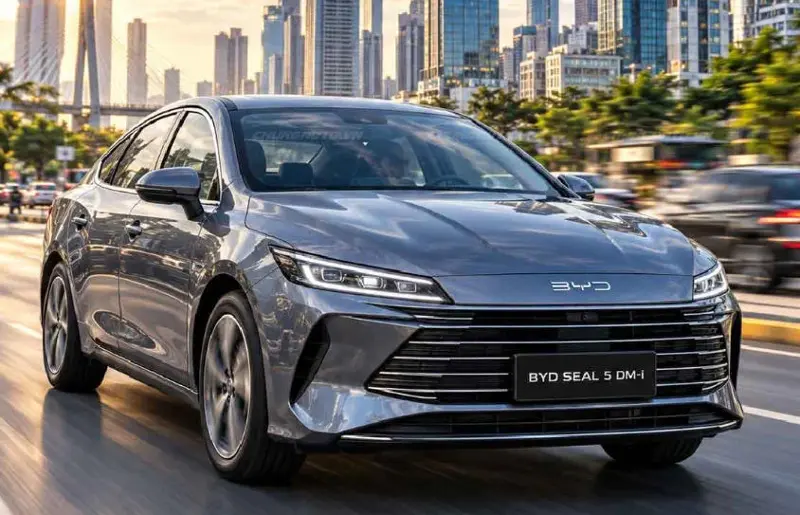
The market in Vietnam is also booming.
The electric vehicle market in Vietnam is becoming increasingly vibrant. Alongside leading Vietnamese brands like VinFast , Chinese electric vehicle brands are also making a strong entry into the market.
After the first three quarters of 2026, the Vietnamese automotive market is witnessing a strong surge in Chinese car brands. With approximately 13 new models and versions introduced, including the Geely Coolray facelift, Okavango, EX2, and EX5 EM-i B-segment SUVs; Lynk & Co 02, 03, and Lynk & Co 900; and BYD Seal 5 DM-i, BYD Dolphin 2026, and PHEVs… accounting for nearly one-third of the total number of new cars launched, these manufacturers are not only covering segments from mainstream to luxury, but are also creating a fierce race in powertrain technology, especially in Hybrid (HEV), Plug-in Hybrid (PHEV), and pure electric (BEV) vehicles.
According to the sales report just released by the Vietnam Automobile Manufacturers Association (VAMA) on October 9th, total market sales for this group in September 2026 reached 35,094 vehicles, a breakthrough increase of 38% compared to August 2026 and a 14% increase compared to the same period in 2025.
A standout technological highlight in the September VAMA report is the breakthrough in the hybrid vehicle segment. In September 2026, VAMA members sold 2,168 hybrid vehicles, a 56% increase compared to August 2026 and a 58% increase compared to the same period in September 2025. For the first nine months of 2026, the total sales of hybrid vehicles by VAMA reached 16,057 units, a sharp 64% increase compared to the 9,785 units sold in the same period of 2025.
According to VAMA, the sales race during the peak year-end period will become even more fierce as car manufacturers belonging to the VAMA bloc accelerate their pursuit of the "leader" VinFast or compete with new electric vehicle manufacturers from China.
With the proliferation of hybrid, plug-in hybrid, and all-electric vehicle technology platforms, Chinese automakers are making the Vietnamese automotive market increasingly vibrant, creating fierce competition and forcing other brands to transform themselves more significantly.