


Aches and stiffness in the joints can sometimes be related to everyday movement habits. Sitting for long periods at a desk, looking down at a phone, or frequently performing exercises with incorrect posture can cause muscles and joints to become stiff, limiting mobility.
Maintaining some basic movements can help the body retain strength and flexibility as age increases. According to physical therapists, these don't necessarily have to be complex exercises or require specialized equipment.
Here are 6 exercises that many people use. Experts recommend ...
1. Standing on one leg is one of the simplest ways to improve your balance. This ability tends to decline with age if not actively maintained.
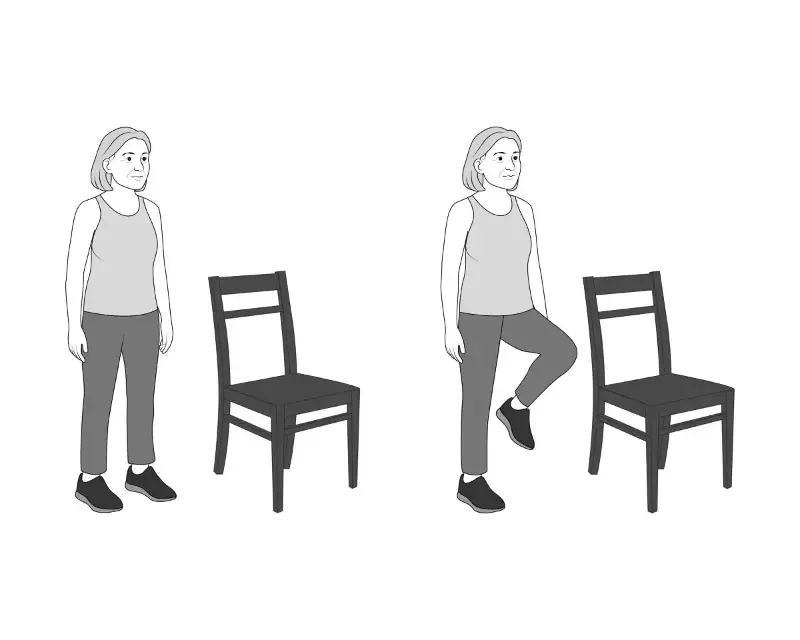
According to Conor Nordengren, a physical therapist in Wellesley, Massachusetts, standing on one leg strengthens the muscles in the feet, ankles, knees, and thighs, while also improving the stability of the hips, pelvis, and lower back.
You can practice during short bursts of time, such as while waiting for coffee or the elevator. If you're not yet steady on your feet, lightly place your hands on a chair, wall, or table to maintain balance, then gradually reduce the support. Once the exercise becomes too easy, you can try closing your eyes, but only do so when you are sure it is safe. The goal is to stand on each foot for at least 30 seconds each day.
2. Hip flexion is a useful movement in both daily life and exercise. The ability to flex from the hips correctly is especially important when bending down to pick up objects, and it is also the foundation of movements such as the deadlift or kettlebell swing.
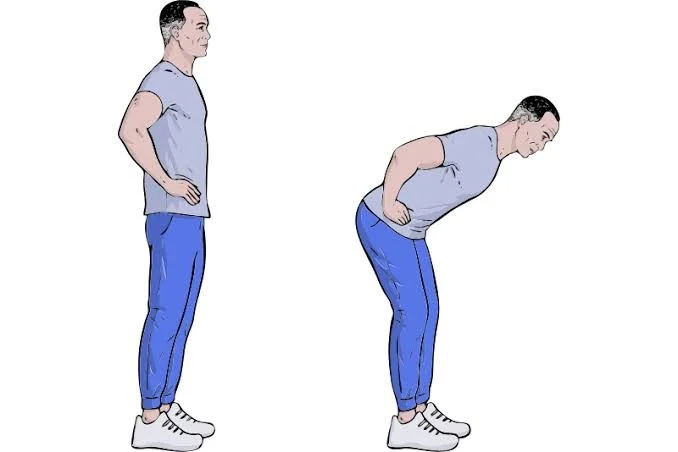
Dhara Shah, a physical therapist at Emory Healthcare in Atlanta, says many people tend to arch their backs and lock their knees when bending over, putting extra pressure on the spine. Practicing proper hip flexion technique also helps strengthen the gluteal and hamstring muscles.
To perform this exercise, push your hips back while simultaneously bringing your chest forward. Keep your back straight, shoulders slightly pulled back, tighten your abdominal muscles towards your navel, and keep your knees slightly bent. You can do 2 sets of 15 repetitions each day.
3. Sitting down and standing up is a very simple movement, but it has practical significance for mobility in old age. The strength needed to stand up from a chair can decrease with age if not maintained.
This exercise targets the quadriceps, glutes, hamstrings, calf muscles, and core muscles.
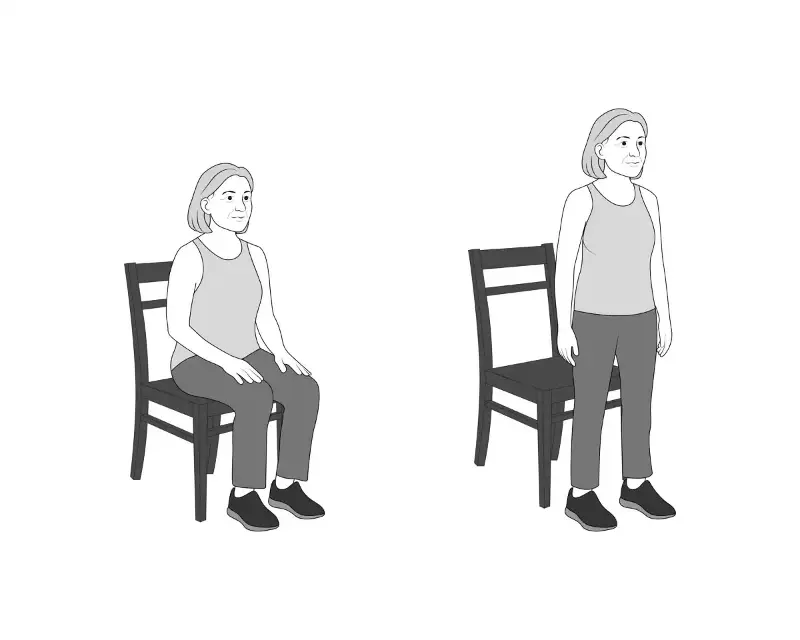
You can start by sitting down on a chair and then slowly standing up, performing the exercise in a controlled manner. Once you get used to it, lower yourself more slowly and only lightly touch your buttocks to the chair before standing up. The lower the chair, the more difficult the exercise. You can do 2 sets of 20 repetitions, a few times a week. As your strength increases, you can add weights or kettlebells to increase the difficulty.
4. Dead bug breathing combined with diaphragmatic breathing is a way to exercise core muscles without equipment. Carrie Pagliano, a physical therapist in Arlington , Virginia, says that common neck, shoulder, or back problems after prolonged sitting are sometimes related to insufficient core muscle strength.
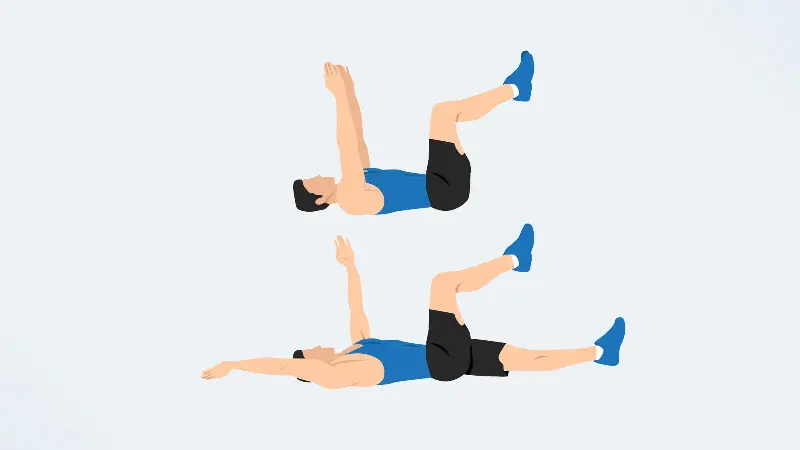
To perform this exercise, lie on your back, raise both legs to a 90-degree angle, and extend both arms straight up towards the ceiling. Keeping your spine flat on the floor, slowly extend your left leg forward and lower your right arm, then return to the starting position and switch sides.
While extending your arms and legs, slowly exhale through your mouth and gently tighten your abdominal and core muscles . When returning to the starting position, inhale and allow your abdomen to expand. You can do 2 sets of 8 repetitions each, a few times a week.
Alicia Ferriere, a physical therapist in Maplewood, New Jersey, says that combining diaphragmatic breathing with dead bug breathing helps increase core muscle stability from within, thereby supporting the spine and potentially reducing neck and shoulder tension and pain.
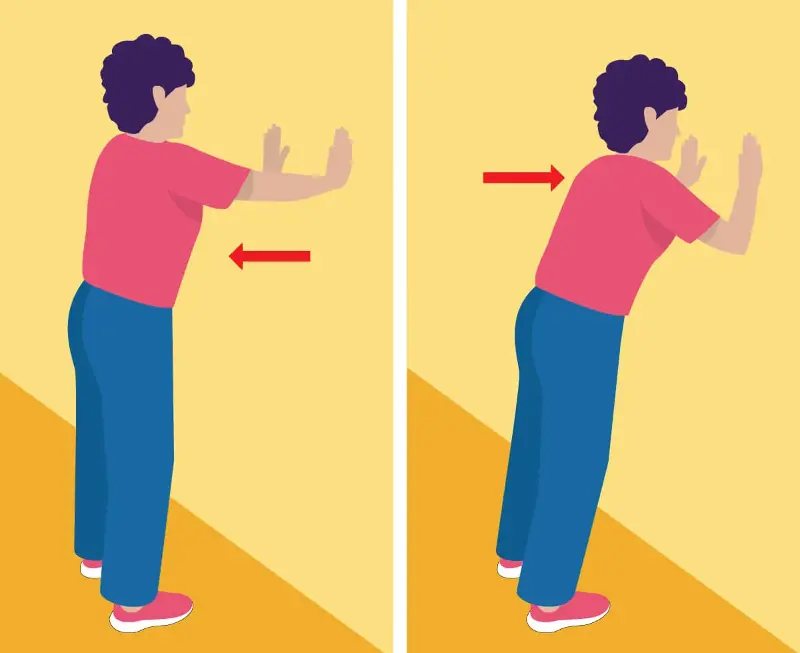
5. Wall Push -ups Push-ups are another exercise that is particularly valuable for maintaining independence in old age. In addition to strengthening the chest, shoulders, arms, and core muscles, push-ups also improve the ability to lift and control body weight.
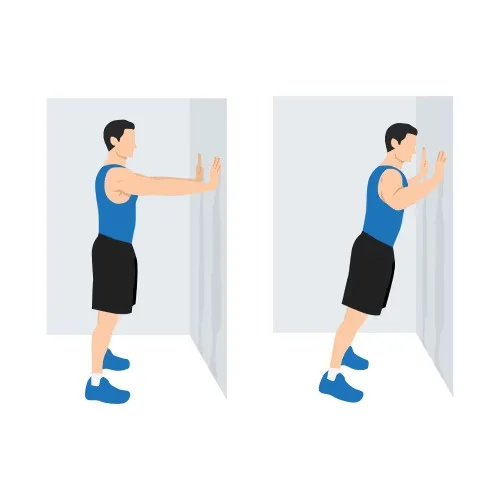
However, it's not necessary to start with push-ups from the floor. Specialists Conor Nordengren Beginners are advised to place their hands on a wall or a sturdy tabletop. As their strength increases, they can gradually move to lower surfaces before progressing to push-ups on the floor.
Start in a plank position, keeping your back straight and your feet firmly on the floor. Tighten your core muscles and slightly curl your tailbone down to avoid arching your back. Bend your elbows about 45 degrees, slowly lower your chest down, and then push yourself back up. You can start with 2 sets of 10 repetitions each, twice a week.
6. The cat-cow stretch is a simple exercise that can help relieve stiffness in the spine, shoulders , and neck, especially after prolonged periods of sitting or standing.
In a position supporting you on your hands and knees, alternate between arching and straightening your back. Breathe deeply in each pose to increase the sense of stretch and perform the movement slowly and with control.
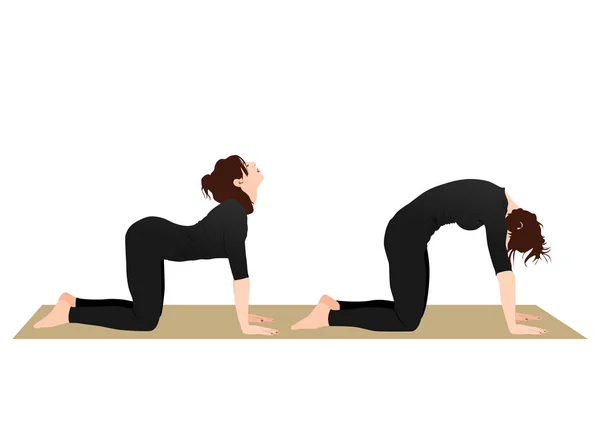
According to physiotherapist Alicia Ferriere suggests that this pose can be combined with several other movements, such as extending each arm forward, extending each leg backward, or performing hip rotations.
The common thread among these six exercises lies not in their high intensity requirements, but in their ability to maintain fundamental motor skills: balance, proper bending, standing up from a chair, body stability, supporting body weight, and maintaining spinal flexibility.
These are all abilities that are directly relevant to mobility and maintaining independence in daily life as one ages.