



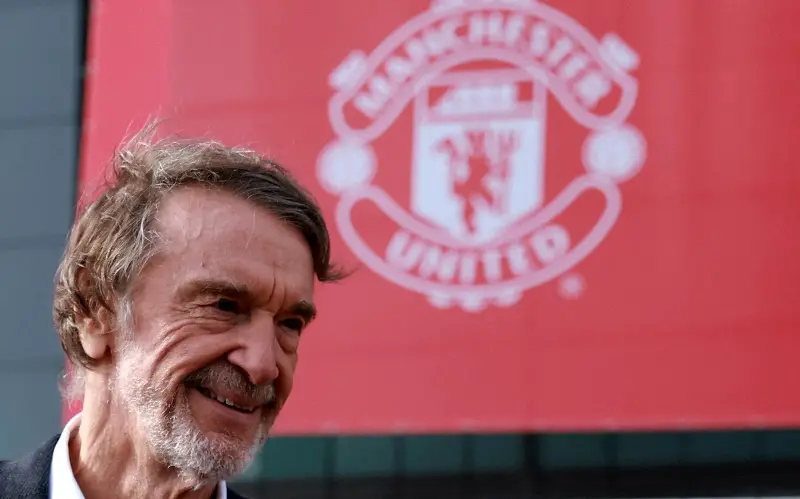
Sir Jim Ratcliffe’s drastic cost-cutting has boosted Manchester United’s bottom line with the club reporting an operating profit of £32.6m for the first six months of this season.
United posted an operating loss of £3.9m over the corresponding period last season. The turnaround has been credited to the “impact of operating cost and headcount reduction” that included more than a third of the workforce being shed. Staff numbers have reduced from more than 1,100 to around 700 in the space of 18 months.
Omar Berrada, the United chief executive, said: “We are now seeing the positive financial impact of our off-pitch transformation materialise both in our costs and profitability.”
Ratcliffe has courted much controversy since acquiring a 28.94 per cent stake in the club two years ago. He also drew widespread criticism this month for claiming the UK was being “colonised” by immigrants, for which he issued a qualified apology.
The United co-owner, however, would strongly argue that his cost-cutting measures are now starting to bear fruit.
Despite the improving financial picture, though, United’s latest accounts still underline the importance of the club qualifying for a return to the Champions League this season.
Revenues were down £11.1m compared to the corresponding six months last season, mainly owing to the absence of European football, fewer matches following the club’s premature exits from the Carabao Cup and FA Cup and hits to commercial income.
United, who are forecasting total income of £640m to £660m for this season, are still searching for a new training kit partner to replace the deal with Tezos that ended last summer.
Michael Carrick’s side are set to play just 40 games this season – the lowest amount since the 1914-15 campaign.
United played just 20 games in the first six months of this campaign compared to 28 over the corresponding period last term.
The club have benefited from a significant drop of £7.4m in the wage bill for the last quarter owing to the job cuts and with first-team players on substantially reduced salaries because of the absence of Champions League football.
The players can expect to have their wages increased by 25 per cent next season should United get back into Europe’s premier club competition.
Monday’s 1-0 win at Everton moved the team back up to fourth in the table, three points behind third placed Aston Villa.
United’s debt mountain stands at £481.3m with a further £295.7m drawn down from their revolving credit facility as of December 31, 2025. Those figures do not include monies still owed on transfers.
“We continue to take a football-first approach and invest in both our men’s and women’s first teams,” Berrada added. “Today’s results demonstrate the underlying strength of our business as we continue to push for the best football results possible for our men’s and women’s teams.”