



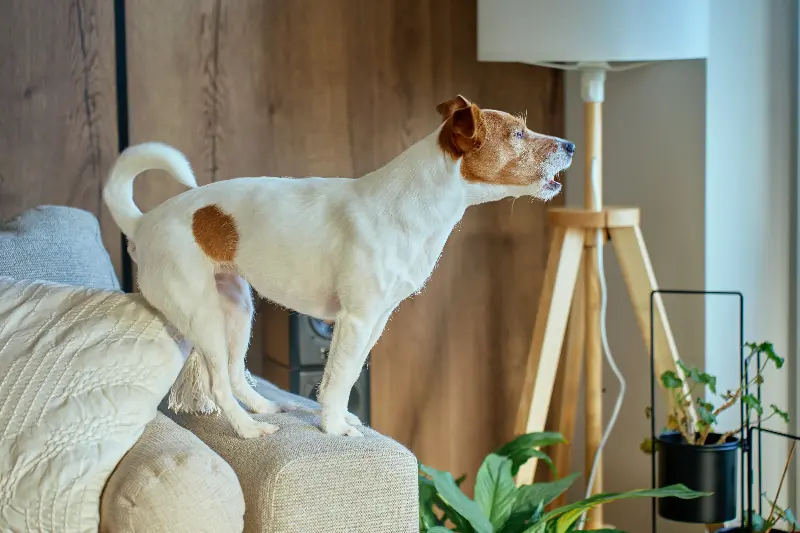
For many families, the idea of a protective dog doesn’t always match the reality of their home or lifestyle. Not everyone has the space—or desire—for a large guard dog. But the good thing is that protection can come in a much smaller package.
According to experts, many tiny breeds carry big confidence, loud voices, and strong territorial instincts that make them surprisingly effective watchdogs.
Dr. Chyrle Bonk, veterinarian at Embrace Pet Insurance, told Newsweek that plenty of tiny pups “deliver” when it comes to watching over the home.
The 10 Most-Protective Small Breeds
Bonk highlights several small breeds that act like little guardians. Miniature schnauzers, for example, are very vocal and quick to respond to sound. Boston terriers bark at sudden noise or movement, while Cairn terriers are fiercely territorial.
Jack Russell terriers bring nonstop energy and a readiness to sound the alarm. Scottish terriers are tough, brave and vocal, and West Highland white terriers are so persistent, “they don’t give up!”
Dachshunds are loyal and territorial with a strong desire to bark when something seems off. Pomeranians may look cute and fluffy, but they are loud and fearless. Chihuahuas are loyal, nervous and not afraid to “bark (or even bite!)” when pushed. And while Shih Tzus are usually friendly, they are so loyal that they won’t hesitate to protect their family.
Together, these breeds may be small, but their instinct to react, warn and defend is often anything but.
Is Bark Better Than Bite?
Dr. Ann Marie Zollo, senior veterinarian at the Schwarzman Animal Medical Center, says that barking is not only safer but also far more useful for most families.
Zollo said that a dog’s bark is a communication tool that announces something unusual and often scares off a potential threat. “A confident dog uses its voice, not its teeth,” she said, adding that biting usually signals fear or poor impulse control.
Bonk agreed that barking is usually enough, though she said that “a bite is always a good backup” for very small dogs when barking alone doesn’t work.
How To Tell Protective Behavior From Anxiety
Holly Jordan, veterinarian and co-founder at Barkly, told Newsweek that anxiety often shows as whining, pacing, howling and avoidance of strangers.
Meanwhile, a protective dog’s behavior is steady and deliberate—they usually give warning signs, such as a growl or snarl, before taking action.
Zollo added that many people mistake anxiety for protectiveness. One of the key differences is that a confident dog can relax once the owner indicates everything is fine, while a stressed or insecure pup stays tense, reactive or unable to calm down.
Are Mixed Breeds Better Guard Dogs?
Zollo said a dog’s ability to protect has less to do with being purebred or mixed and more to do with personality, early socialization and training.
She added that temperament develops from experience and environment, not breed labels.
Can You Teach a Dog How To Be a Guard Dog?
According to Bonk, canines with natural guarding instincts can be taught when to react and when to stop, which is crucial for safety. However, Zollo said that real protection work requires specialized breeding and professional training, and teaching a pet to behave aggressively can increase fear, stress and bite risk.
Jordan said that dogs can be trained but reminded owners that choosing a breed should be about more than just protection.
“We should always consider not only if a dog is a good fit for us, but also if we are a good fit for the dog. Dogs may be used to serve a purpose other than companionship, but they are sentient beings and it is our duty to make sure that their physical and emotional needs are also being met,” Jordan said.
Do you have funny and adorable videos or pictures of your pet you want to share? Send them to [email protected] with some details about your best friend, and they could appear in our Pet of the Week lineup.