



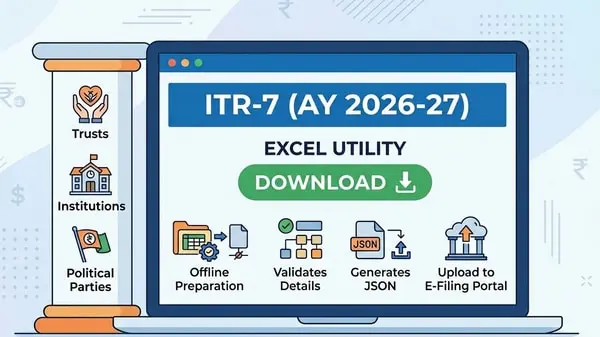
Taxpayers using ITR-7 can now download the Excel utility, enter and validate return details offline, generate a JSON file and upload it on the Income Tax e-Filing portal to complete the filing process. The department announced the rollout through a post on X.
Who can use ITR-7?
ITR-7 is not meant for salaried individuals. It is applicable to persons, including companies, that are required to furnish returns under Sections 139(4A), 139(4B), 139(4C) and 139(4D) of the Income-tax Act.
The form is primarily meant for charitable and religious trusts, political parties, scientific research institutions, universities, colleges and certain educational institutions required to file returns under these provisions. According to ClearTax, firms, companies, associations of persons (AOPs), local authorities and artificial juridical persons covered under these sections can also use ITR-7 where applicable.
How to file using the Excel utility
The offline utility allows taxpayers to prepare their return without remaining connected to the internet throughout the filing process. After downloading the utility from the Income Tax e-Filing portal, users can fill in the required schedules, validate the information and generate a JSON file. The JSON file can then be uploaded to the portal to submit the return electronically.
The due date for filing ITR-7 depends on whether the entity is subject to audit. Non-audit cases are generally required to file by August 31, 2026, while entities whose accounts require an audit have time until October 31, 2026. Those required to furnish transfer pricing reports can file their returns by November 30, 2026. Eligible organisations are therefore advised to begin preparing their returns early to avoid last-minute compliance issues.