



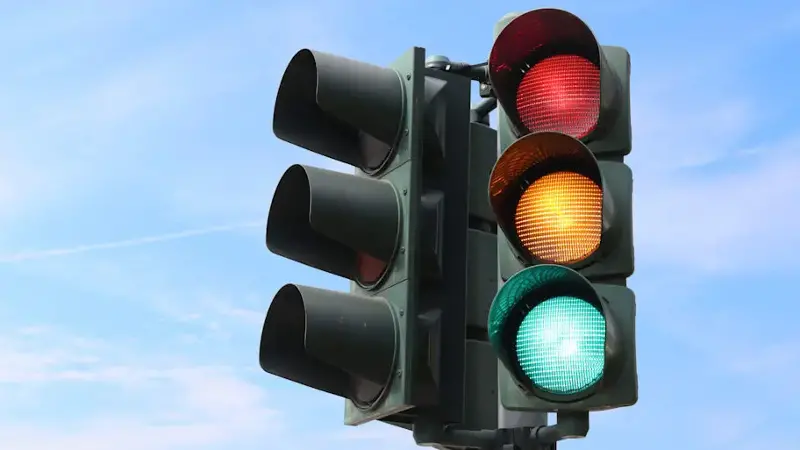
Every car speeding by and person crossing the street is living out their own story, traveling in their own direction, under the same three-light system.
We encounter traffic lights nearly every day, but rarely give them a second thought.
Whether driving to work or taking an afternoon stroll, you probably glance at these signals at least once a day, if not more. Maybe your apartment window overlooks three traffic lights in a bustling city. Or perhaps you live in a small rural community and pass the town’s one traffic light each day during your lunch break.
We all know that traffic lights are meant to organize traffic and keep intersections safe, but have you ever wondered why the signals are specifically red, yellow, and green? While the purpose is familiar, the origins of these color choices and their history aren’t as widely understood.
BREIF HISTORY OF TRAFFIC LIGHTS AND THEIR COLORS
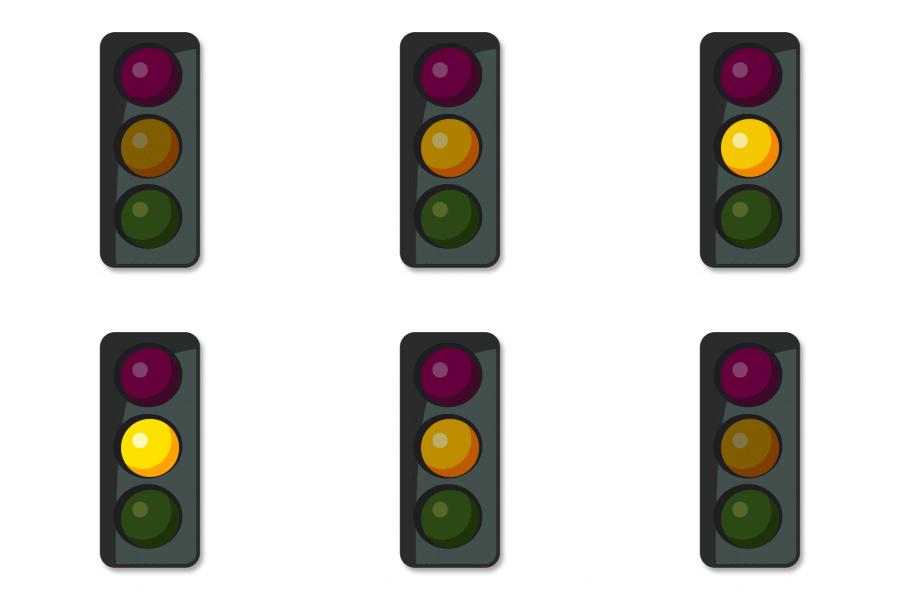
Before the 1900s, there was little need for traffic lights. But, as cities became more populated, transportation diversified, and traffic-related deaths increased, the need for a signal to improve the flow of turn-of-the-century transit became very apparent.
First, there was nothing. According to Reader's Digest, in early 20th-century America, drivers had to share the road (then unpaved) with trolleys, bicycles, wagons, pedestrians, horses, and trains. As you can imagine, this was not a safe or sustainable. Legend has it that the Los Angeles Dodgers baseball team earned its name because dodging trolleys was a common and hazardous part of daily life in the city.
Soon, police officers were stationed at intersections in major cities (New York, Detroit, Cleveland, Los Angeles, and Chicago) to manage and direct traffic. In crowded intersections jammed with various forms of transportation, this was a particularly challenging job.
Enter: traffic lights.
The idea for a traffic light system was derived from an ancient signaling system called Semaphore Flagging, which was first adopted by railways. Railroad engineer J.P. Knight was the first to design and install a traffic signal in London in 1868, using only red and green gas-lit lights.
In 1912, Salt Lake City police officer Lester Wire invented the first electric traffic light in the United States, though it required a policeman to manually operate it. A few years later, James Hoge patented an automatic electric traffic signal (first used in Cleveland), which still featured only two lights.
Garrett Morgan’s innovation of the fully automatic, three-color traffic light in 1923 marked a turning point for traffic safety. This invention helped bring traffic fatalities down from "over 33 per 10,000 cars to less than two."
But, of all the possible color combinations, why did engineers pick red, yellow, and green for traffic lights?
WHY RED, YELLOW, AND GREEN?
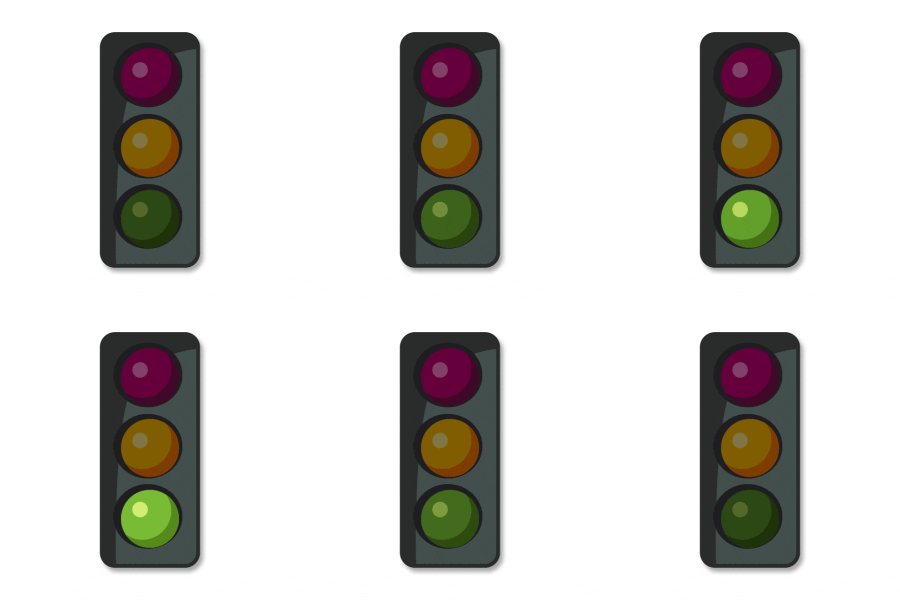
The decision to use red, yellow, and green in traffic lights is equally influenced by psychology and practicality.
Red
Red universally symbolizes danger, making it the obvious choice for the "stop" signal. Psychologically, this bold color increases heart rate and triggers anxiety, effectively commanding attention and conveying urgency. Its long wavelength also allows it to be seen from a greater distance than other colors.
Yellow
The addition of yellow was a game-changer for traffic lights. Initially, with only red and green lights, drivers had almost no warning before needing to stop, leading to abrupt halts. Drivers would rush through intersections to avoid the sudden switch from green to red. The yellow light was introduced to provide a much-needed transition, giving everyone a warning to slow down and safely clear the intersection.
Green
The use of green for "go" dates back to early railway systems, where it served the same purpose. This tradition carried over to traffic lights. Psychologically, green brings a sense of calmness and reassurance, signaling that it is safe to proceed. Our eyes are naturally sensitive to green light, allowing us to easily detect it at any distance.
In 1935, the Federal Highway Administration (per the Manual on Uniform Traffic Control Devices) officially standardized red, yellow, and green as the required colors for all traffic lights in the United States.
ON THE ROAD AGAIN
Though we take them for granted, traffic lights play a crucial role in keeping us safe, whether we're behind the wheel or crossing the street on foot. Without these signals, intersections would be chaotic and hazardous.
Next time you find yourself stopped at a red light, take a moment to reflect on the thoughtful design behind this everyday signal and the colors that move us forward.
Read More About Traffic Safety:
- A Brief History of Traffic Lights
- The Reason Why Stop Signs Are Red
- What’s the Point of a “Wait for Green” Traffic Sign?