



History is a vast treasure trove of innovation, discovery, and delightful surprises. While textbooks often focus on timelines, the real magic lies in the remarkable achievements and quirky coincidences that showcase human ingenuity and the wonders of the natural world. Let’s explore some uplifting and unbelievable facts that will forever change how you view the story of our planet.
CLEOPATRA LIVED CLOSER TO THE MOON LANDING THAN TO THE PYRAMIDS
We often group "Ancient Egypt" into one single era, but the timeline is incredibly expansive. Cleopatra VII reigned around 30 BC, while the Great Pyramid of Giza was completed roughly 2,500 years earlier, around 2560 BC.
To put that into perspective:
- The Pyramids were already "ancient" history to Cleopatra.
- The gap between her life and the 1969 Apollo 11 Moon Landing is actually shorter than the gap between her and the building of the pyramids.
This highlights just how enduring and sophisticated ancient civilizations were, maintaining their culture over millennia.
THE SECRET STRENGTH OF ANCIENT ROMAN ENGINEERING
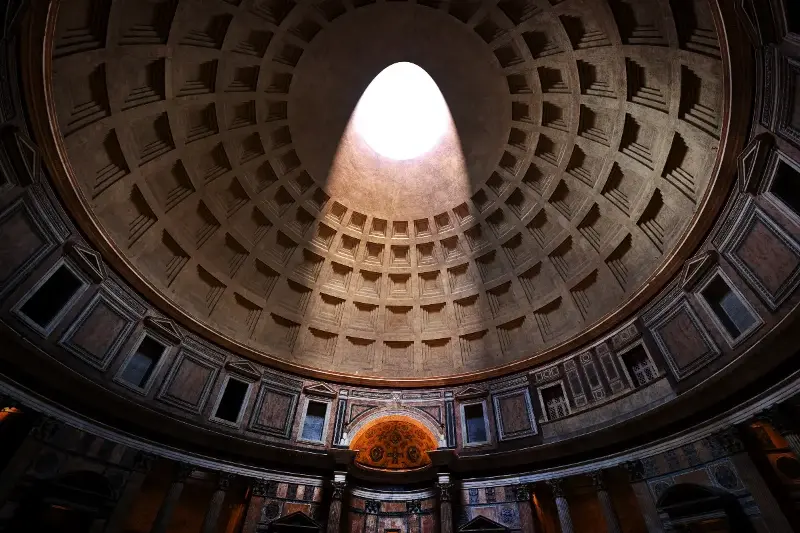
Ancient Roman structures like the Pantheon and various aqueducts have stood for over 2,000 years, surviving earthquakes and the elements. Their secret? A revolutionary type of concrete made from volcanic ash and seawater.
Unlike modern concrete, which can degrade over decades, Roman concrete actually self-heals. When seawater hits the material, it triggers a chemical reaction that creates a rare mineral, making the structure even sturdier over time. Today, scientists are studying this ancient "green" technology to create more sustainable and durable buildings for our future.
THE WORLD’S OLDEST SURVIVING MELODY
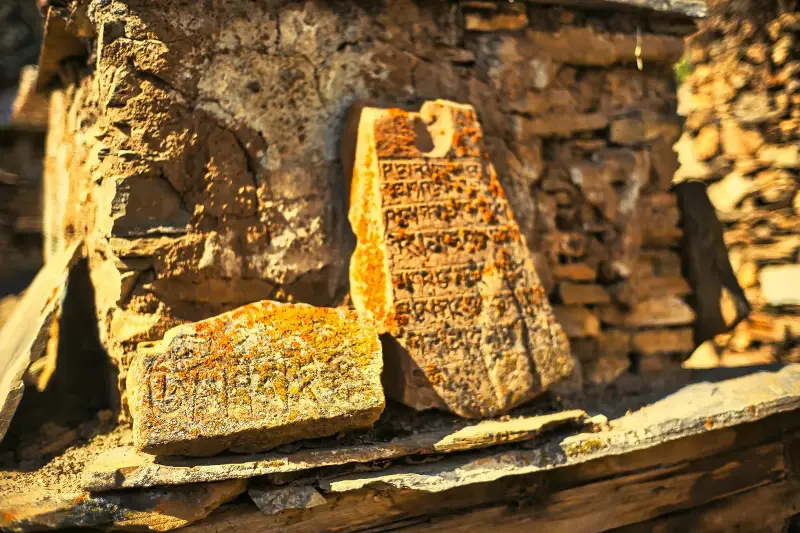
Music has always been a universal language. The oldest known song with a recorded melody is the "Hurrian Hymn No. 6", which dates back to the 14th century BC. Discovered on clay tablets in modern-day Syria, it includes notations for a nine-stringed lyre.
When played today, the melody is hauntingly beautiful and surprisingly familiar, proving that the human desire to express emotion through harmony is a thread that has connected us for thousands of years.
A FORWARD-THINKING LIBRARY OF CLAY
In the 7th century BC, King Ashurbanipal of Assyria created a massive library because he believed that knowledge belonged to the future. He sent scribes across the land to collect and copy every important text they could find.
His library contained thousands of tablets on astronomy, medicine, and literature. Because he chose to record these on durable clay rather than perishable paper, we can still read the world's oldest stories today. It was one of the earliest examples of a leader prioritizing global education and preservation.
THE "WONDER MATERIAL" OF THE MIDDLE AGES
Long before modern chemistry, artisans in the Middle Ages were accidental nanotechnologists. The vibrant stained glass windows in cathedrals were created by mixing gold and silver chlorides into the molten glass.
This process created "quantum dots" that interacted with light to produce brilliant reds and yellows that never fade. These craftsmen weren't just making art; they were utilizing advanced physics to create beauty that would inspire people for centuries.
THE UNSTOPPABLE JOY OF THE PANDA DIPLOMACY
Throughout history, nature has often been used as a bridge between cultures. One of the most positive traditions is "Panda Diplomacy", which dates back as far as the Tang Dynasty in the 7th century. Giving or lending these gentle bears was seen as a gesture of ultimate friendship and peace. It serves as a heartwarming reminder that shared appreciation for the world’s beauty can bring different nations together in a spirit of cooperation.

CONCLUSION
The past isn't just a record of what happened; it’s a blueprint of human potential and resilience. From self-healing concrete to ancient songs that we still hum today, history shows us that we have always been explorers, creators, and dreamers. These stories remind us that the world has always been a place of astonishing wonder, and that the best chapters of our history are built on knowledge, art, and connection.