


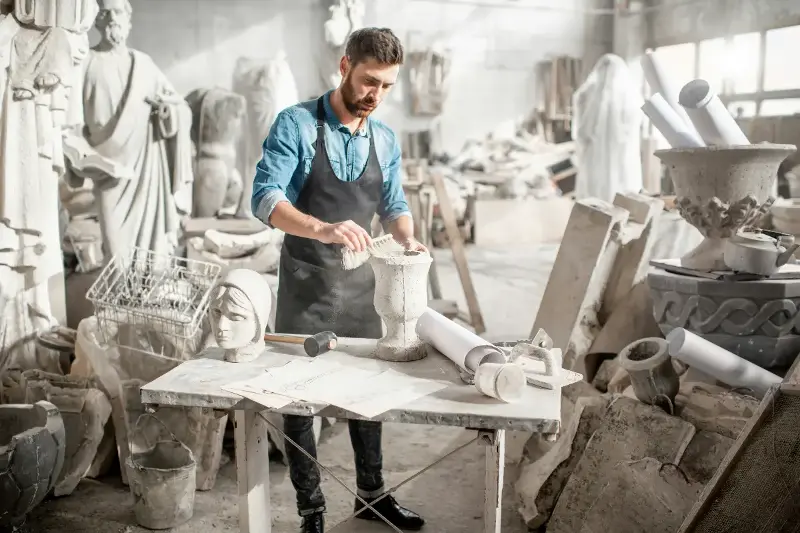
Sculptors have debated the relative difficulty of carving stone and wood for centuries, yet the question remains endlessly captivating in contemporary art studios. The answer depends on how an artist defines a challenge. Stone demands patience, physical force, disciplined planning, and respect for irreversible decisions. Wood, by contrast, requires acute sensitivity to organic grain, shifting moisture, internal flaws, and a living material that moves long after the work is complete. Both media present formidable technical tests that challenge the mind and body in distinctly different ways.
A grand marble figure may take months or years to emerge from a solid block, while a delicate wooden sculpture can split overnight if it dries too rapidly. Stone carries the impressive weight of permanence and historic prestige. Wood offers natural warmth, dynamic movement, and a direct connection to living nature.
The Physical Demands of Stone
Stone sculpture is widely recognized as an intense physical discipline. Extremely dense rocks like granite and basalt resist hand tools, rapidly wearing down chisels and drill bits. Even softer varieties—such as limestone, alabaster, and soapstone—require exact control and careful strike execution.
Subtractive carving in stone leaves very little room for error:
- Irreversible cuts: Removing too much material can permanently ruin facial features, limbs, or key structural elements.
- Massive physical weight: A single cubic metre of dense stone can weigh over 2,600 kilograms, requiring heavy lifting equipment and professional support.
- Workshop safety: Cutting stone generates high noise, vibration, and fine dust, making proper ventilation, water suppression systems, and heavy-duty respirators essential.
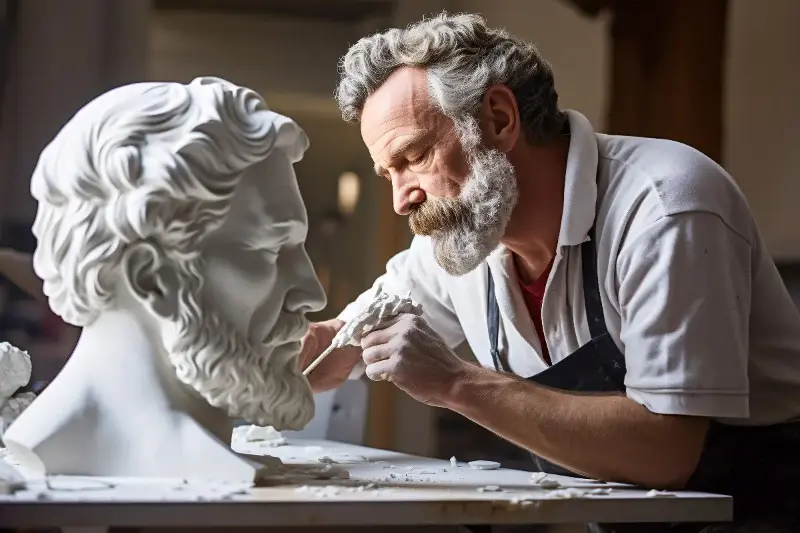
While modern diamond blades and pneumatic chisels speed up rough shaping, power tools can destroy delicate details in seconds. Many master sculptors still rely on traditional hand tools for final finishing, as they grant precise control over surface texture and subtle contours.
The Unpredictable Nature of Wood
Wood may initially seem more accessible than stone because it is lighter and easier to cut. However, it possesses an intricate personality that can surprise even seasoned carvers. Every species behaves uniquely; basswood features fine, uniform grain ideal for crisp detail, while oak is dense and challenging to carve.
Working with timber presents several natural hurdles:
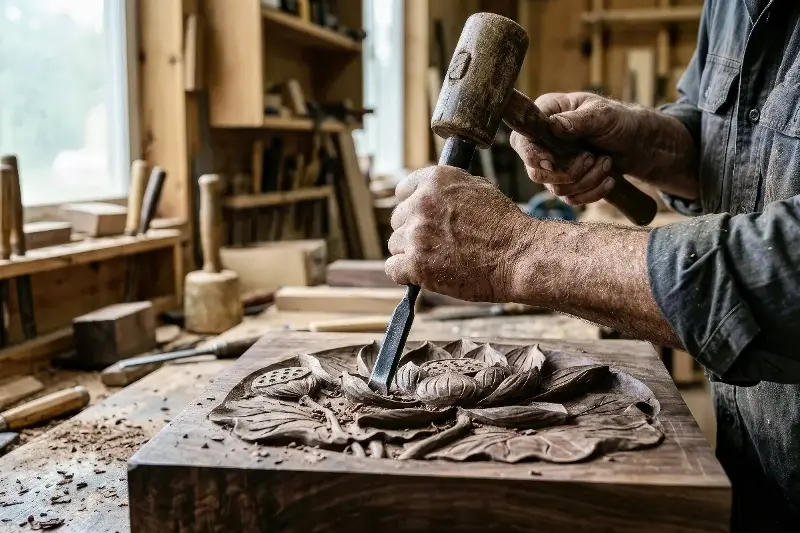
- Navigating the grain: Carving with the grain yields silky, clean surfaces, but cutting against it can tear out wood fibers unexpectedly.
- Internal defects: Knots, hidden decay, resin pockets, and insect damage can suddenly appear beneath the surface.
- Environmental movement: Wood continuously responds to humidity by expanding, contracting, and warping over time.
Contemporary sculptors often embrace these organic qualities, utilizing reclaimed beams, storm-felled timber, and driftwood to let natural history shape the final artwork.
Skill, Technology, and Creative Risk
Modern sculptors benefit from advanced technologies like 3D scanning, digital modeling, and automated carving machinery. Yet these tools do not eliminate the need for deep material intuition. A digital model cannot predict a hidden fissure inside a block of marble or a twisting grain pattern deep within a tree trunk. The artist must constantly adapt to what the material reveals.
Planning a stone sculpture requires tremendous discipline before the first strike because mistakes cannot be undone. Conversely, wood sculpture demands continuous adjustment throughout the creation process as moisture shifts and grain patterns change.
Cost, Access, and Environmental Responsibility
Practical access heavily influences an artist's choice. High-grade carving stone is expensive to purchase and ship, requiring dedicated studio space with industrial dust collection. Wood is often easier to source locally from sustainable sawmills, arborists, or recycling centers.
Ultimately, stone represents the ultimate test for artists seeking unyielding endurance and monumentality. Wood poses an equal challenge for those drawn to organic warmth and fluid collaboration with nature. The finest sculptors do not view either medium as an obstacle to conquer; they learn its natural limits, respect its character, and transform physical resistance into profound art.