



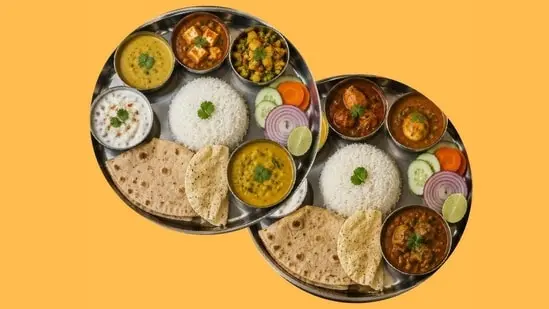
Cooking at home became more expensive in June as rising prices of tomatoes, edible oil, LPG cylinders and chicken pushed up the cost of preparing everyday meals, according to Crisil Intelligence's latest Roti Rice Rate (RRR) report.
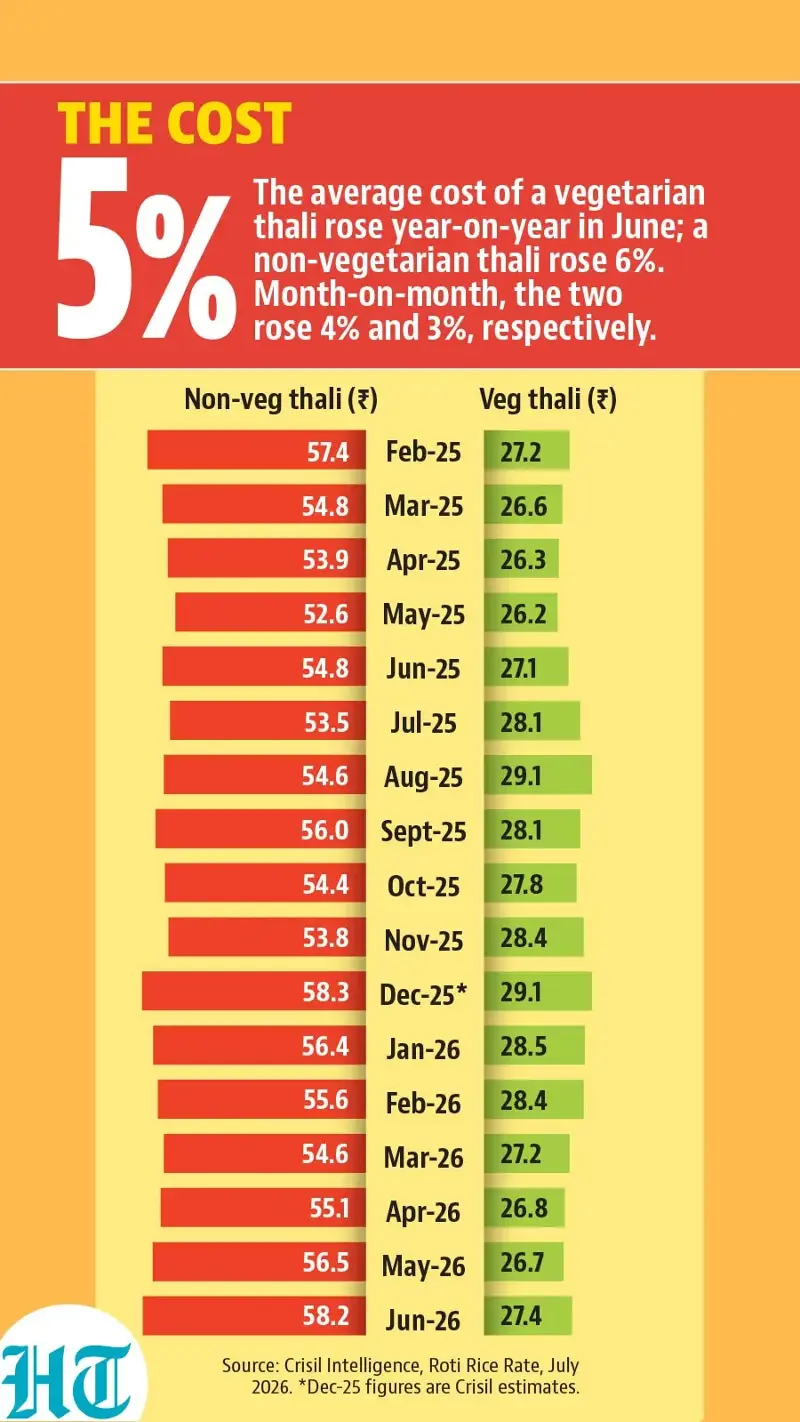
The average cost of a vegetarian thali increased 5% year-on-year in June, while a non-vegetarian thali became 6% more expensive compared with the same month last year. On a month-on-month basis, the cost rose 4% for a vegetarian thali and 3% for a non-vegetarian thali.
Tomatoes emerged as the single biggest reason behind the increase, while higher prices of cooking oil and LPG added to the burden for households.
What is the Roti Rice Rate index?
The Roti Rice Rate (RRR), compiled by Crisil Intelligence, tracks the monthly cost of preparing a home-cooked thali based on prevailing retail prices of commonly used ingredients across India.
A vegetarian thali includes cereals, pulses, vegetables, spices, edible oil and LPG, while a non-vegetarian thali factors in the additional cost of broiler chicken.
How much does a home-cooked meal cost now?
The average cost of a vegetarian thali rose to ₹27.4 in June from ₹26.1 a year earlier and from ₹26.7 in May.
The average cost of a non-vegetarian thali climbed to ₹58.2 in June from ₹54.9 a year earlier and ₹56.5 in May.
While monthly fluctuations are common, the latest increase reverses the decline seen during the early months of 2026.
Why did home-cooked meals become more expensive?
Several food items became costlier simultaneously, but tomatoes had by far the biggest impact.
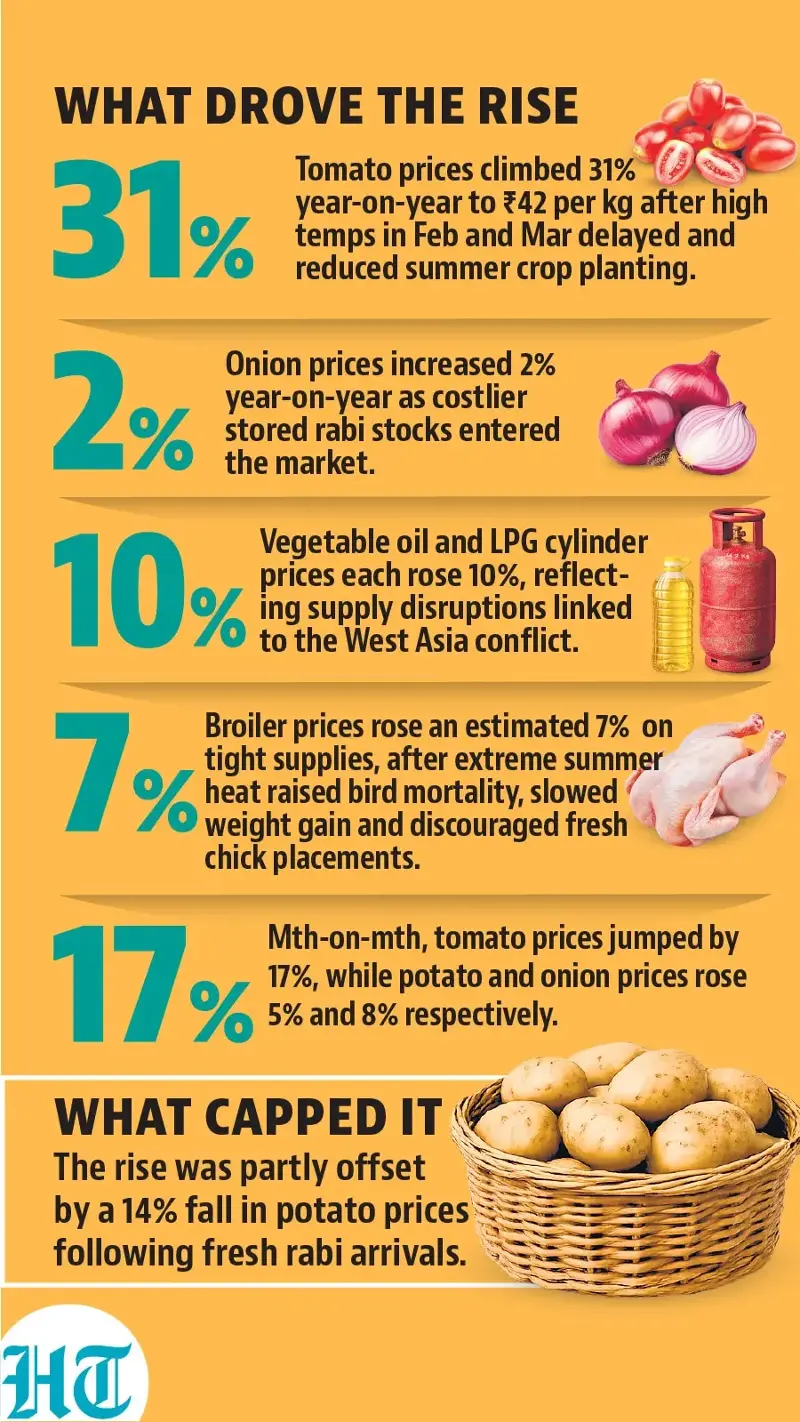
Tomatoes jumped 31% year-on-year
Tomato prices surged 31% from a year ago to ₹42 per kg.
According to Crisil, unusually high temperatures in February and March delayed and reduced summer crop planting, tightening supplies and lifting prices.
Tomatoes also registered the sharpest monthly increase, rising 17% from May.
Onion prices remained firm
Onion prices increased 2% year-on-year as more expensive stored rabi stocks entered the market.
On a monthly basis, onion prices rose 8%, adding to the overall increase in meal costs.
Cooking oil and LPG got dearer
Vegetable oil and LPG cylinder prices each rose 10% compared with a year ago.
Crisil attributed the increase to supply disruptions linked to the conflict in West Asia, which has affected global energy markets and edible oil prices.
Chicken became costlier too
The cost of broiler chicken, which directly affects non-vegetarian thalis, increased an estimated 7% year-on-year.
The rise was driven by tight supplies after extreme summer heat increased bird mortality, slowed weight gain and discouraged fresh chick placements.
What prevented prices from rising even more?
The increase in meal costs would have been sharper had potato prices not fallen significantly.
Potato prices declined 14% year-on-year following fresh rabi arrivals, partially offsetting the rise in tomatoes, onions and cooking oil.
Even so, potatoes became 5% more expensive compared with May, reflecting seasonal changes in supplies.
How have thali prices changed over the past year?
The cost of a vegetarian thali has fluctuated between ₹26.7 and ₹29.1 over the past year, while a non-vegetarian thali has largely remained in the ₹53.5- ₹58.3 range.
After easing during the first half of 2026, both categories recorded increases in June as vegetable prices rebounded.
Will food prices remain high?
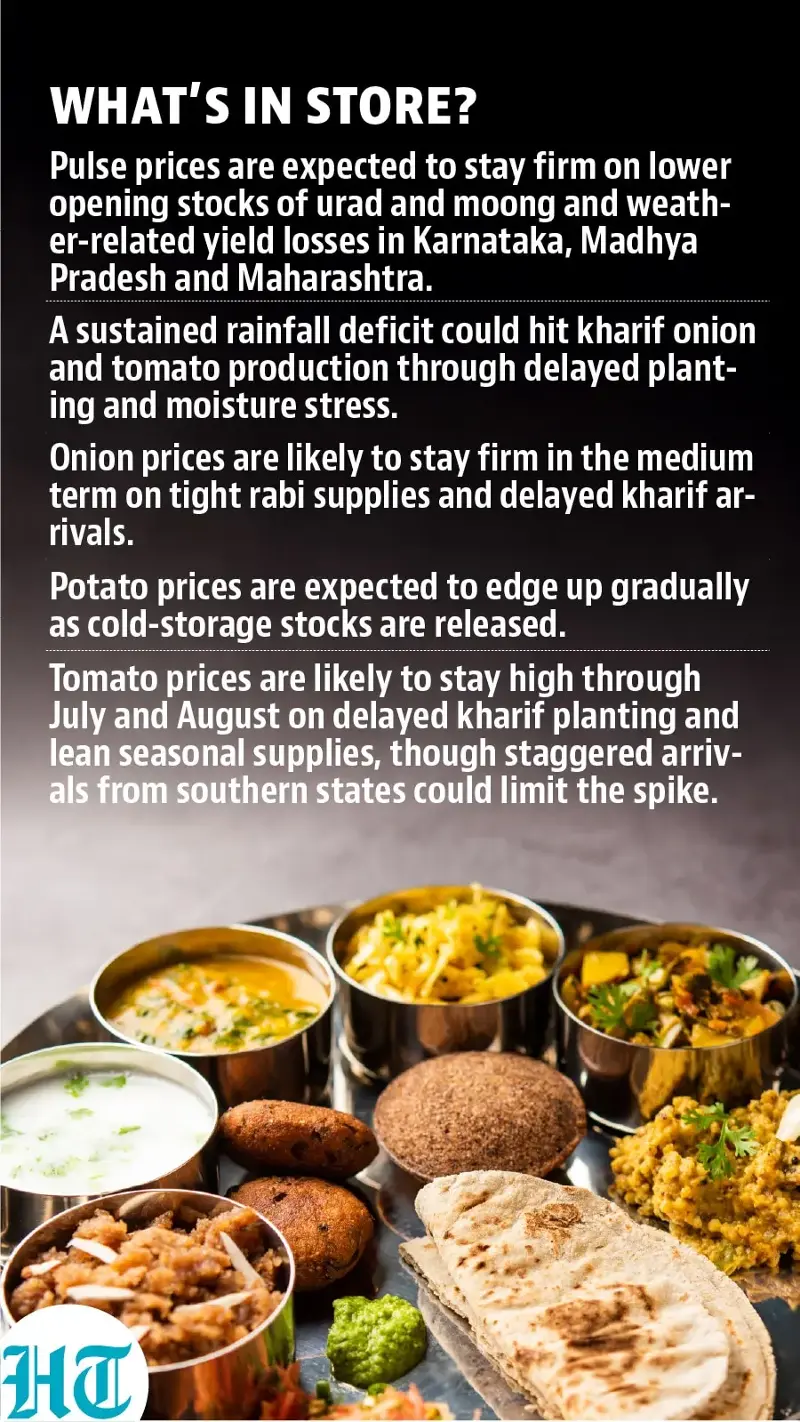
Crisil expects several food items to remain expensive over the coming months.
- Pulses: Prices are likely to stay firm because of lower opening stocks of urad and moong, along with weather-related yield losses in Karnataka, Madhya Pradesh and Maharashtra.
- Tomatoes: Prices are expected to remain elevated through July and August due to delayed kharif planting and lean seasonal supplies, although staggered arrivals from southern states could limit further spikes.
- Onions: Prices may remain firm over the medium term because of tight rabi supplies and delayed arrivals of the kharif crop.
- Potatoes: Prices are expected to edge up gradually as cold-storage stocks are released into the market.